HOD IVF & Infertility MAX SUPERSPECIALITY HOSPITAL Vaishali- DELHI NCR


For many couples, the journey to parenthood doesn't unfold the way they imagined. Months pass. Sometimes years. Hope rises, dips, and rises again. Then comes a diagnosis that catches many people off guard—low sperm count.
It happens more often than most people think.
In fact, male-factor infertility contributes to a significant number of infertility cases worldwide. Yet, despite the growing awareness around fertility treatments, many couples still wonder whether pregnancy is possible when sperm count is extremely low.
The answer? Often, yes.
This is where ICSI enters the picture.
A low sperm count means there are fewer sperm available in the semen than what is considered normal for natural conception. The challenge isn't always just the number. Sometimes sperm may also have poor movement or abnormal shapes, making it difficult for them to reach and fertilise an egg.
Think about it this way.
Natural conception is a bit like sending thousands of runners into a marathon and hoping one reaches the finish line. When the number of runners is drastically reduced—or when many struggle to move efficiently—the odds naturally become lower.
Frustrating.
But not impossible.
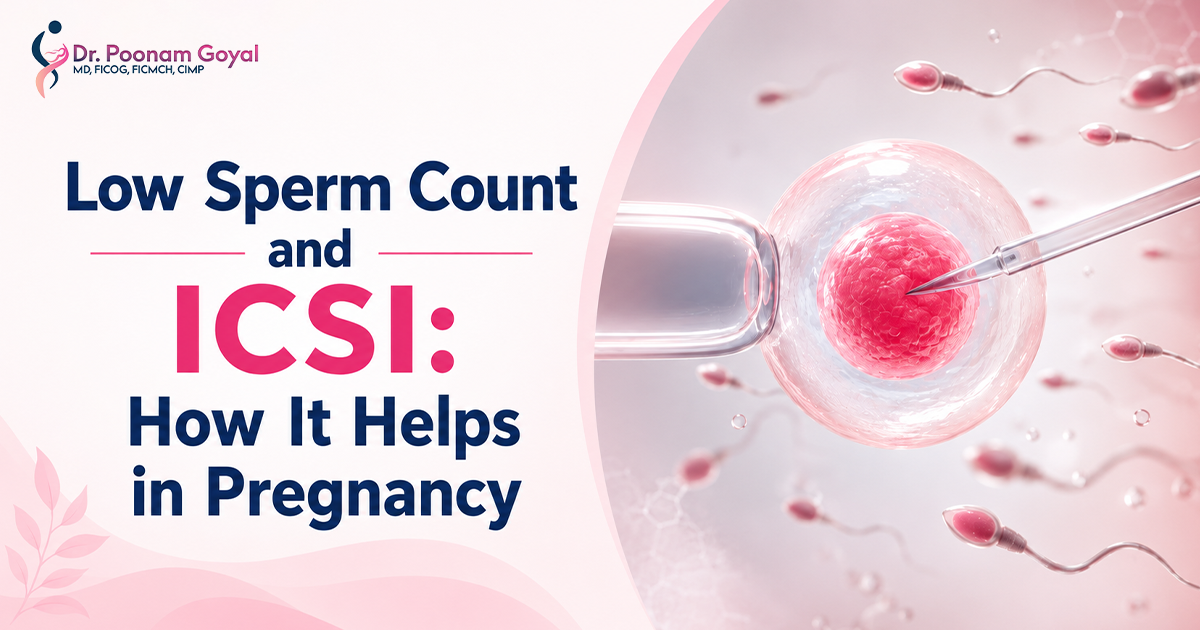
ICSI, or Intracytoplasmic Sperm Injection, is an advanced fertility procedure performed as part of IVF treatment.
Unlike conventional fertilisation, where thousands of sperm are placed around an egg and left to fertilise naturally, ICSI takes a far more direct approach. An embryologist carefully selects a single healthy sperm and injects it directly into the egg using specialised microscopic equipment.
One sperm.
One egg.
One carefully controlled process.
That single step has transformed fertility treatment for countless couples dealing with severe male infertility.
Here's where things become interesting.
When sperm count is low, the biggest obstacle is often getting enough healthy sperm to successfully fertilise an egg. Traditional methods may not always overcome this challenge. ICSI bypasses many of the barriers that prevent fertilisation from happening naturally.
Even when only a limited number of healthy sperm are available, embryologists can identify the best-quality sperm for the procedure. In some cases, sperm can even be retrieved directly from the testes when they are not present in the ejaculate.
Remarkable, isn't it?
Instead of relying on thousands of sperm competing to reach an egg, ICSI eliminates the competition altogether. The sperm is placed exactly where it needs to be.
ICSI is commonly recommended when a man has:
● Very low sperm count
● Poor sperm motility (movement)
● Abnormal sperm morphology (shape)
● Previous failed IVF fertilisation attempts
● Surgically retrieved sperm
● Obstructive male infertility conditions
Not every couple requires ICSI. That's why a thorough fertility evaluation remains essential before deciding on the most suitable treatment path.
Which brings us to an important point.
Fertility treatment should never follow a one-size-fits-all formula.
Every couple arrives with a different medical history, different challenges, and different hopes.
Many couples ask this question during their first consultation.
The truth is that success depends on several factors, including the woman's age, egg quality, uterine health, embryo quality, and the underlying cause of infertility.
Low sperm count alone does not automatically reduce the chances of success with ICSI. In fact, ICSI was specifically developed to overcome fertilisation problems caused by male-factor infertility.
That distinction matters.
A lot.
With proper assessment and personalised treatment planning, many couples with severe male infertility have successfully achieved pregnancy through ICSI.
Fertility treatment involves much more than technology. It requires careful diagnosis, precise laboratory techniques, and experienced medical guidance at every stage.
A skilled fertility specialist evaluates both partners, identifies the root causes affecting conception, and develops an approach tailored to their unique situation.
At her fertility practice, Dr Poonam Goyal focuses on evidence-based fertility care while supporting couples through every step of their reproductive journey. From initial investigations to advanced treatments such as ICSI, the goal remains the same—helping couples move closer to a healthy pregnancy with confidence and clarity.
Parenthood may take a different route than expected.
That's okay.
Sometimes all it takes is the right treatment, the right timing, and the right expertise to turn years of uncertainty into a positive pregnancy test. And for many couples facing low sperm count, ICSI has become exactly that opportunity.
.jpg)