HOD IVF & Infertility MAX SUPERSPECIALITY HOSPITAL Vaishali- DELHI NCR


You finish work late.
Again.
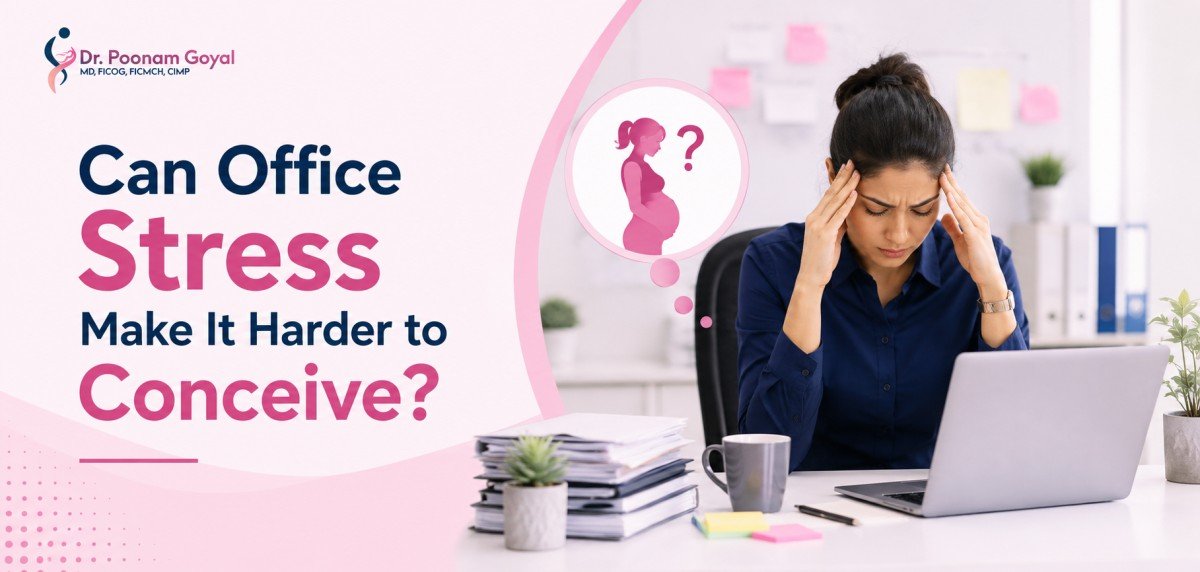
The laptop closes, but your mind doesn't. There is tomorrow's presentation, an unread email from your manager, targets that somehow keep moving, and then the quiet thought that has been sitting in the background for months: Why aren't we pregnant yet?
For couples trying to conceive, office stress can become more than an eight-hour problem. It can spill into evenings, weekends, sleep, relationships and even the way you think about intimacy. And yes, severe or persistent stress may affect fertility in some people. But here's the thing — stress isn't a magic switch that simply turns fertility off. Fertility is complicated, and blaming yourself for being stressed won't make the situation any easier.
A difficult day at work isn't usually enough to interfere with conception.
The problem is chronic stress.
When your body spends weeks or months operating under pressure, stress hormones such as cortisol and adrenaline remain part of the picture. You may sleep poorly. Skip meals. Reach for caffeine. Stop exercising. Eat whatever is quickest between meetings. None of this sounds particularly dramatic on its own, but stack those habits together and your overall health can take a hit.
For some women, significant stress may contribute to menstrual changes or disrupted ovulation. Stress can also affect libido and the couple's sexual relationship — especially when intimacy starts feeling like another item on a calendar rather than something shared between two people.
That's where things get frustrating.
Imagine someone checking her ovulation app at 7 a.m., rushing through a work meeting at 11, answering messages at 8 p.m., and then trying to calculate whether tonight is "the right day."
Romantic?
Not exactly.
When trying to conceive becomes another performance target, sex can start carrying pressure instead of pleasure. Fertility awareness can be useful, but overly rigid scheduling may itself increase stress and reduce sexual satisfaction or frequency for some couples.
And when pregnancy doesn't happen that month, the cycle begins again: disappointment, more worrying, more searching, more tracking.
A little breathing room matters.
Not necessarily.
This distinction matters.
Infertility can have many causes, including age-related changes, ovulation problems, endometriosis, tubal issues, sperm-related factors and other medical conditions. Stress is only one possible factor, and sometimes it may have an indirect effect rather than being the root cause.
So if you've been trying for several months and haven't conceived, don't automatically assume, "It's because my job is stressful."
That conclusion could delay the evaluation of something else that deserves attention.
A proper fertility assessment looks at the bigger picture.
Start with the basics.
Sleep properly.
Eat regular, nourishing meals.
Move your body.
Take short breaks during a demanding workday.
And don't let fertility tracking consume every conversation with your partner.
You don't need to quit your job tomorrow morning or live in a perfectly peaceful bubble to improve your reproductive health. Nobody has that kind of life. The goal is to reduce the constant strain where you realistically can and build healthier routines around your work.
If your stress feels overwhelming, talking to a counsellor or mental-health professional can also be worthwhile. Looking after emotional wellbeing isn't separate from fertility care; it is part of caring for the person going through the process.
If pregnancy hasn't happened after 12 months of regular unprotected intercourse, it is generally appropriate to seek a fertility evaluation; women aged 35 or older are usually advised to seek assessment sooner, around six months of trying.
Don't wait indefinitely while blaming your office.
Don't assume every late period is stress.
And don't assume fertility problems are the woman's responsibility alone — fertility factors can involve either partner.
For couples who are worried about conception, consulting an experienced fertility specialist can bring clarity to an otherwise exhausting guessing game. Dr Poonam Goyal takes a comprehensive approach to fertility and women's reproductive health, helping couples understand what may be affecting their chances of conception and what options may be appropriate for them.
Work will always have another deadline.
Your health deserves some space too.
If you're struggling to conceive, don't let self-blame become another burden you carry home from the office. A proper medical evaluation can help separate everyday stress from genuine fertility concerns — and that distinction can be incredibly reassuring.
.jpg)