HOD IVF & Infertility MAX SUPERSPECIALITY HOSPITAL Vaishali- DELHI NCR


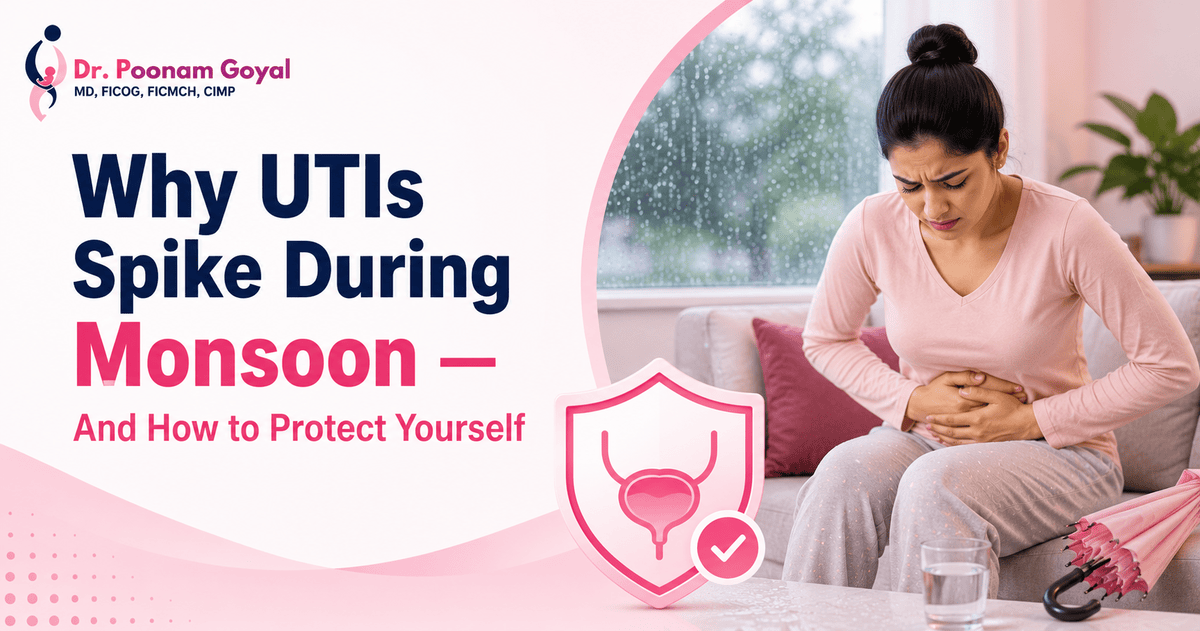
The rains feel refreshing. The weather cools down. Everything seems cleaner.
Your urinary tract, unfortunately, doesn't always agree.
Monsoon is one of those seasons when urinary tract infections (UTIs) quietly become more common, especially among women. Damp clothes, increased humidity, dehydration, and the growth of bacteria create conditions that make infections easier to develop than many people realise. A quick outing in rain-soaked jeans or spending hours in wet activewear may not seem like a big deal, yet these everyday habits can sometimes become the starting point for an uncomfortable infection that refuses to disappear without treatment.
That's exactly why Dr Poonam Goyal encourages women not to dismiss early symptoms as "just a seasonal problem." Catching a UTI early is usually much easier than dealing with one that's allowed to spread.
Humidity changes everything.
Bacteria love moisture.
Your body notices.
Unlike winter, when the skin and clothing stay relatively dry, the monsoon creates an environment where bacteria multiply faster. Wet undergarments, excessive sweating, reduced airflow around intimate areas, and prolonged dampness all contribute to bacterial growth. Even something as ordinary as sitting in wet leggings after getting caught in the rain can increase irritation and encourage bacteria to travel into the urinary tract.
Then comes another overlooked issue—people often drink less water during rainy weather because they don't feel as thirsty. That sounds harmless until you realise urine is one of the body's natural ways of flushing bacteria out. Less water means fewer bathroom visits, giving bacteria extra time to multiply.
Not ideal.
A UTI rarely arrives dramatically.
It starts quietly.
Then it becomes impossible to ignore.
Watch for symptoms like:
● Burning sensation while passing urine
● Frequent urge to urinate, even when little urine passes
● Lower abdominal discomfort
● Cloudy or foul-smelling urine
● Blood in the urine
● Mild fever or fatigue
Many women try home remedies for several days, assuming the discomfort will disappear on its own. Sometimes it does. Sometimes it doesn't. And when bacteria travel upward to involve the kidneys, what began as a simple infection can become much more serious.
That's why Dr Poonam Goyal advises timely medical evaluation rather than prolonged self-medication.
Here's the encouraging part.
Most preventive measures are surprisingly simple.
Consistency matters far more than complexity.
Rainy weather shouldn't reduce your water intake. Drinking enough fluids helps flush bacteria from the urinary tract before they have the opportunity to multiply.
Whether it's rainwater, sweat after a workout, or damp undergarments, change into dry clothing as soon as possible. Think of moisture as an open invitation for bacteria—it doesn't need much encouragement.
Wash the intimate area gently with clean water and avoid harsh, heavily scented hygiene products. These products can disturb the natural balance of healthy bacteria that normally protect against infection.
Busy work schedules, long commutes, or simply delaying bathroom breaks can increase infection risk. Your bladder isn't designed to store urine indefinitely.
Cotton allows better airflow and reduces trapped moisture compared to many synthetic fabrics. Sometimes the simplest wardrobe choice quietly makes the biggest difference.
Not everyone faces the same level of risk.
Some women need extra caution.
Pregnant women, women with diabetes, those experiencing recurrent UTIs, menopausal women, and individuals with weakened immunity are generally more susceptible. Even women who have had one UTI before may notice recurring infections during humid months.
Pregnancy deserves special attention because untreated urinary infections may affect both maternal health and pregnancy outcomes. Regular check-ups become even more important during this period.
Pain that lasts for more than a day shouldn't be ignored.
Neither should fever.
Definitely not blood in the urine.
If symptoms persist, become more severe, or return repeatedly, professional evaluation is necessary. Diagnosis usually involves a simple urine examination, allowing treatment to begin before complications develop.
Trying multiple over-the-counter medications without confirming the cause often delays recovery. Not every burning sensation is caused by the same infection, and antibiotics should never be taken without proper medical advice.
Monsoon shouldn't be a season you fear.
It should simply be a season you prepare for.
A few thoughtful habits—staying hydrated, changing out of wet clothes promptly, practising good hygiene, and paying attention to early symptoms—can significantly reduce your chances of developing a urinary tract infection.
If you experience persistent urinary discomfort, recurrent UTIs, or symptoms that interfere with your daily life, consulting an experienced gynaecologist is the safest approach. Dr Poonam Goyal provides comprehensive evaluation and personalised care for women dealing with urinary tract infections, pregnancy-related urinary concerns, and a wide range of gynaecological conditions, helping patients receive timely treatment and long-term preventive guidance.
.jpg)