HOD IVF & Infertility MAX SUPERSPECIALITY HOSPITAL Vaishali- DELHI NCR

One cycle. Two. Maybe three.
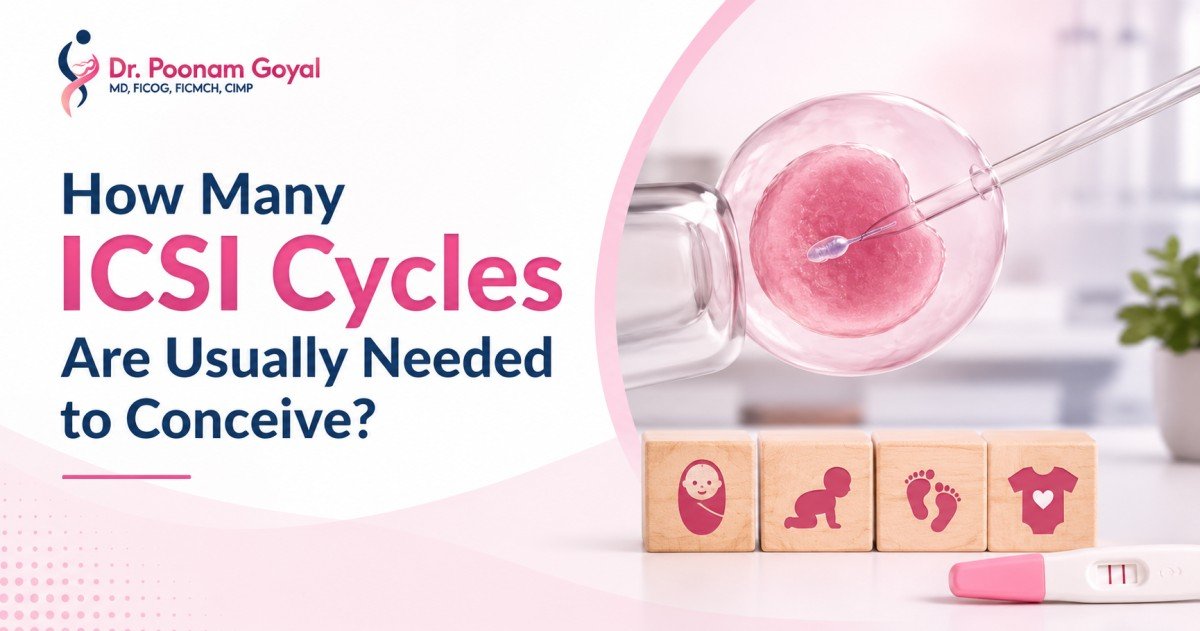
For couples considering ICSI, one of the first questions that quietly sits in the room is: How many ICSI cycles are usually needed to conceive? It’s a fair question. IVF and ICSI involve time, money, medications, appointments, and plenty of emotional energy, so naturally, couples want to know how many attempts they might need before they finally see those two lines on a pregnancy test.
But there isn't a magic number.
Some couples conceive during their first ICSI cycle. Others need two or three attempts, while some may require a different treatment strategy altogether. The outcome depends on several factors, and age, egg quality, sperm factors, embryo quality, and the underlying cause of infertility can all influence the chances.
An ICSI cycle is a fertility treatment process that involves ovarian stimulation, egg retrieval, sperm collection, fertilisation through Intracytoplasmic Sperm Injection, embryo development, and embryo transfer. ICSI treatment in Delhi may be considered for couples who need additional assistance with fertilisation, particularly when male-factor fertility issues or previous fertilisation problems are involved. The exact treatment plan may vary depending on the couple’s fertility needs and the doctor’s assessment.
There is no universal answer.
Many couples may become pregnant after their first ICSI attempt, particularly when factors such as younger maternal age, adequate ovarian reserve, good egg quality, healthy embryos, and favourable uterine conditions are present. Others may require another attempt if the first cycle doesn't result in pregnancy.
And sometimes the first cycle teaches the fertility team something valuable.
Perhaps fewer eggs responded than expected. Perhaps embryo development wasn't as strong as hoped. Maybe the endometrium wasn't ideally prepared for transfer. Or perhaps the sperm-related factor needs closer attention. These details can help a fertility specialist modify the next treatment plan rather than simply repeating exactly what happened before.
Very much.
A woman's age is one of the strongest factors influencing fertility treatment outcomes because egg quantity and, importantly, egg quality generally decline with age. This can affect fertilisation, embryo development and the likelihood of chromosomal abnormalities in embryos.
For example, a woman in her early thirties with a good ovarian response may have a very different treatment outlook from someone approaching her forties—even if both couples are undergoing ICSI for male-factor infertility.
This is why statistics should be treated as guidance, not a personal prediction.
Don't assume that failure means ICSI won't work.
A failed cycle can be heartbreaking, absolutely. But the next step isn't always “try again and hope.” A fertility specialist may review the ovarian response, fertilisation rate, embryo development, endometrial preparation, sperm parameters and other clinical factors before recommending another attempt.
Sometimes the treatment needs adjustment.
Sometimes another embryo transfer is all that is required.
Sometimes additional evaluation makes sense before proceeding.
If you're wondering whether you need one ICSI cycle or several, that's precisely where individual assessment becomes more useful than internet averages.
Dr Poonam Goyal can evaluate your fertility history, age, ovarian reserve, previous treatment outcomes and the specific cause of infertility before discussing what may be a realistic treatment pathway for you.
Because fertility treatment isn't a race to reach a particular number of cycles. The goal is to understand what your body and circumstances are telling you—and use that information intelligently.
One cycle may be enough.
Another couple may need more.
What matters is having a treatment plan built around your fertility journey rather than somebody else's timeline.
.jpg)