HOD IVF & Infertility MAX SUPERSPECIALITY HOSPITAL Vaishali- DELHI NCR


For couples going through IVF, every step carries hope, questions, and a fair bit of nervousness. One question often comes up during treatment: should the embryo be transferred on Day 3 or should we wait until Day 5? It sounds like a small difference. It isn't always.
Both approaches are used in fertility treatment, and each has its own advantages. The right choice depends on embryo development, the number of embryos available, the patient's medical history, and the fertility specialist's assessment. Understanding these differences can help couples feel more prepared when discussing their treatment plan with Dr Poonam Goyal, an experienced fertility specialist.
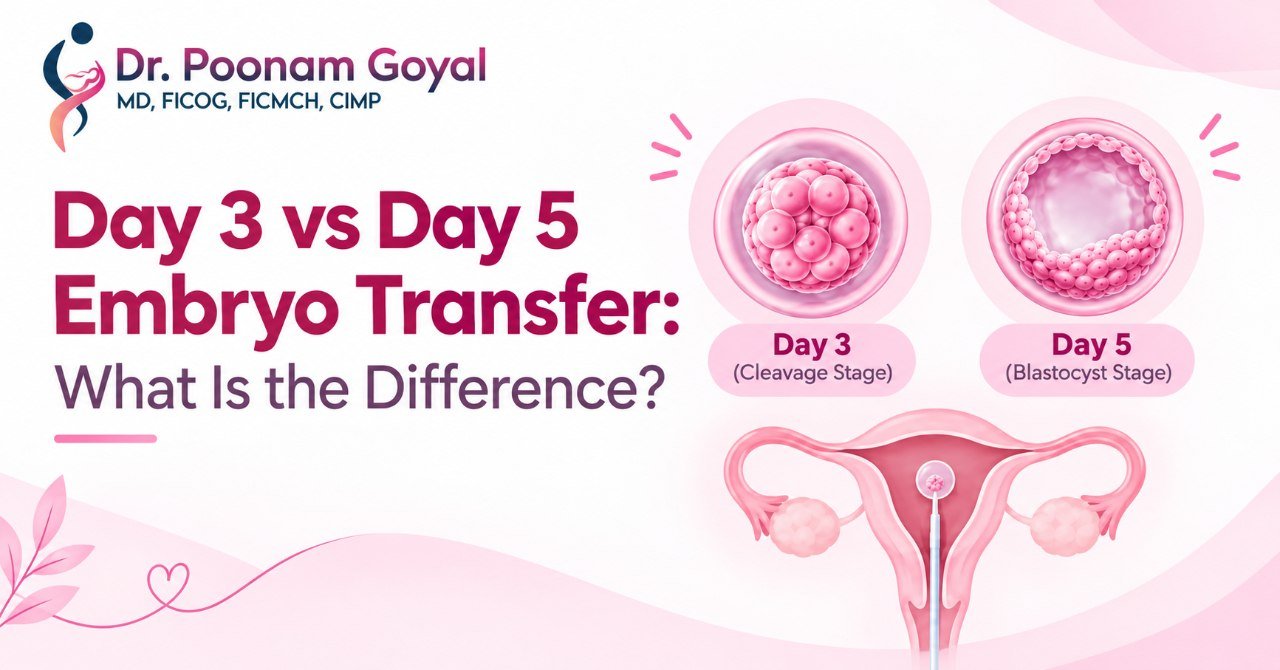
A Day 3 embryo transfer takes place approximately three days after fertilisation. At this stage, the embryo usually contains around six to eight cells and is still developing.
Some fertility specialists recommend a Day 3 transfer when only a few embryos are available or when there are concerns about whether the embryos will continue developing in the laboratory. Transferring earlier allows the embryo to continue its journey inside the uterus, where it may receive natural signals that support its development.
However, an early transfer provides less information about which embryos are most likely to reach the blastocyst stage. The decision must take into account the quality of the embryos and the individual circumstances of the IVF cycle.
A Day 5 embryo transfer happens when the embryo reaches the blastocyst stage. By this point, it has developed into a more complex structure containing cells that will eventually form the foetus and the placenta.
Why wait those extra two days? Because embryo development during this period can provide useful information.
When several embryos are available, the embryology team can observe their progress and identify those that reach the blastocyst stage with promising characteristics. This may help with embryo selection and can be particularly useful in suitable IVF cycles.
Still, not every embryo reaches Day 5. Some stop developing before reaching the blastocyst stage, which can leave fewer embryos available for transfer. That's an important consideration, especially for patients who produce only a small number of embryos.
The main difference is the stage of embryo development at the time of transfer.
There is no universal answer. And honestly, choosing the later transfer date simply because it sounds more advanced isn't the right way to approach IVF.
A fertility specialist considers the complete clinical picture before recommending a transfer strategy. A younger patient with several good-quality embryos may have different options from someone with diminished ovarian reserve or only one or two embryos. Previous IVF outcomes, genetic testing plans, and the clinic's laboratory capabilities may also influence the decision.
If you're exploring treatment with the Best IVF doctor in Delhi, make sure your consultation covers the reasoning behind the recommended transfer day, not just the success rates quoted in general terms.
Dr Poonam Goyal can help patients understand their available options, the benefits and limitations of each approach, and the factors that may influence their individual treatment plan.
No. Day 5 transfer can improve embryo selection in suitable cases, but reaching the blastocyst stage doesn't guarantee implantation, an ongoing pregnancy, or a live birth.
Success rates also need careful interpretation. For example, the pregnancy rate per transfer may differ from the live birth rate per egg retrieval because some patients never reach the transfer stage. Ask your fertility specialist which measure is being discussed and how it applies to your circumstances.
Clear information matters. So does realistic hope.
Day 3 and Day 5 embryo transfers are both valuable options in IVF treatment. One allows an earlier transfer, while the other provides additional time to observe embryo development before making a selection.
The best decision isn't about following a trend. It's about choosing an approach that fits your medical needs, embryo development, and treatment goals.
If you're planning IVF and want to understand which approach may be appropriate for you, consult Dr Poonam Goyal to discuss your options and take your next step with greater confidence.
1. Is Day 5 embryo transfer always better than Day 3?
No. Day 5 transfer can help with embryo selection, but Day 3 transfer may be appropriate in certain clinical situations.
2. Can a Day 3 embryo become a healthy baby?
Yes. Day 3 embryos can continue developing after transfer and may result in a healthy pregnancy and birth.
3. Why might an embryo not reach Day 5?
Some embryos stop developing because of underlying biological or chromosomal factors. This does not necessarily mean that every embryo in a future cycle will develop the same way.
4. How do I decide between Day 3 and Day 5 transfer?
Discuss your age, embryo numbers and quality, medical history, and previous IVF outcomes with your fertility specialist before deciding.
.jpg)